
What an Event Production Company Actually Manages
A practical explanation of the schedules, technical systems, suppliers, rehearsals and live decisions an event production company coordinates.
Reviewed by Upshot Concept · Last updated 26 July 2026
The short answer
An event production company turns an approved brief into a workable live system. That means translating the creative direction into technical requirements, a production schedule, supplier responsibilities, access plans, rehearsals, show cues and contingency decisions.
The job is not simply to book equipment. It is to make sure the venue, stage, audio, lighting, video, content, speakers and crew can work together safely and on time. One production lead should be able to show who owns each decision and how the event moves from load-in to final cue.
Before the venue is confirmed
Production input is useful before a venue contract is final. The team reviews access, power, rigging, ceiling height, sightlines, backstage space, noise restrictions, loading windows and any limitations that affect the intended audience experience.
A visually attractive room can still be a poor production fit. Early review helps expose compromises while the brief can still change, rather than discovering them during technical planning or on site.
Technical design and resourcing
Once the format is clear, production planning defines the stage, scenic, audio, lighting, LED or projection, playback, communications and power requirements. Equipment is then sourced to the approved technical design through suitable specialist partners.
The important question is not who owns a particular piece of equipment. It is whether the proposed system fits the room, programme and audience, and whether competent specialists are accountable for installation, testing and operation.
Schedules, rehearsals and show calling
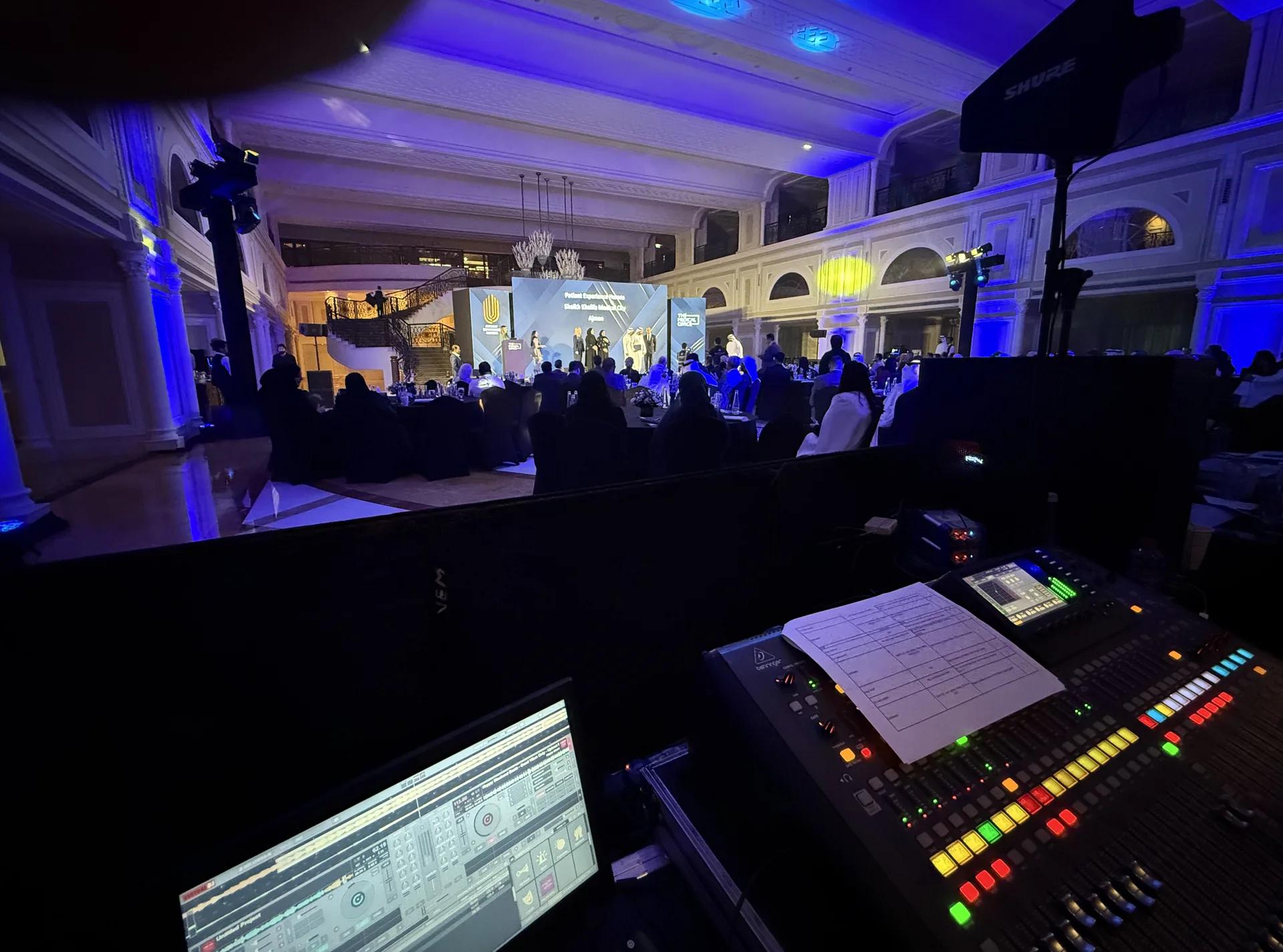
The production schedule connects venue access, supplier arrivals, installation, content checks, speaker rehearsals and doors-open time. The run of show then describes the live sequence: who speaks, what appears on screen, which microphone is live and what the room should see or hear next.
During the event, show calling keeps those departments aligned. A cue is only useful when the people receiving it know what to do, have tested the action and can report a problem quickly.
What the client should receive
A useful production engagement should create clarity: an agreed scope, technical plan, responsibility map, production schedule, content deadlines, run of show and escalation route. The exact documents vary by format, but the decisions should never live only in informal messages.
For full-service briefs, production sits inside the broader event plan. For production-only work, it can begin from an approved agency or client direction. In both cases, the outcome is the same: one coordinated live system rather than separate suppliers solving their own parts.